Search for “best IPTV in Germany” and you’ll find dozens of providers all claiming the same thing: the most channels, the sharpest picture, the lowest price. None of that helps much when you’re the one trying to decide who to actually trust with your money. Rather than handing you a ranked list that goes stale the moment prices change, this guide breaks down exactly what “best” should mean in practice, so you can judge any provider — including this one — on the criteria that actually matter.
Best IPTV Germany: There’s No Single Winner — Only the Best Fit for You
Before comparing anything, it’s worth being honest about something most review sites skip: the best IPTV service for a football fan who wants every Bundesliga match in 4K is not necessarily the best one for a family that mostly watches kids’ channels and movies in the evening. “Best” depends on what you actually watch, how many people in your household are streaming at once, and which devices you already own.
That said, a handful of factors separate genuinely reliable providers from ones that will disappoint you within a month. Those factors are what the rest of this guide focuses on.
Channel Count: Useful, but Not the Whole Story
Providers love to advertise big numbers — anywhere from 10,000 to 80,000 channels depending on who you ask. A large number sounds impressive, but it can be padded with duplicate feeds, dead channels, or low-quality regional streams nobody actually watches. What matters more than the raw total is coverage of the specific categories you care about: German entertainment and news, the sports leagues you actually follow, and international channels if your household needs them.
A well-rounded package for the German market should comfortably cover the major private and public broadcasters, the biggest football competitions (Bundesliga, Champions League, and international leagues like the Premier League and La Liga), and a reasonably current movie and series catalog — ideally in the tens of thousands rather than a token selection. For reference, providers built around a comprehensive catalog, such as IPTV Live DE, sit in the range of 55,000 live channels with a combined film and series library well past 200,000 titles — a useful benchmark for what “comprehensive” should actually look like. Some providers, like IPTV 8K, lean specifically into ultra-high-definition streaming for viewers who prioritize picture quality above all else.
What “Best” Looks Like for Different Types of Viewers
Since one ranking can’t fairly serve everyone, it helps to think in terms of viewer types rather than a single winner.
Sports-focused households should prioritize stability during peak hours above almost everything else, along with confirmed coverage of the specific competitions they follow — Bundesliga, Champions League, and whichever international leagues matter to them. A provider with a huge general channel count but shaky sports feeds during big matches isn’t the right fit here, no matter how impressive the total looks on paper.
Families with children tend to care more about a current, well-organized on-demand catalog and dedicated kids’ channels than about live sports depth. For this group, checking how frequently the movie and series catalog is updated during a trial period is more useful than counting live channels.
Multicultural and multilingual households — common across Germany given large communities with roots in Turkey, the Balkans, the Arab world, and elsewhere — should specifically verify international channel coverage before subscribing, since this is one of the areas where quality varies most between providers.
Renters and frequent movers benefit most from IPTV’s core advantage over cable or satellite: no physical installation tied to a specific address. For this group, a provider with straightforward, portable setup — just re-entering the same login details on a new connection — matters more than any other factor.
Does Where You Live in Germany Affect IPTV Quality?
Not directly through the provider, but indirectly through your own internet connection. Urban areas with widespread fiber coverage generally support smooth 4K streaming without much thought, while some rural regions still rely on slower DSL connections where bandwidth can be a genuine limiting factor, especially with multiple people streaming at once in the same household.
If you’re in an area with a slower or less consistent connection, that’s actually more reason to test thoroughly during a free trial rather than less — a provider that works flawlessly for someone on fiber in Berlin might reveal buffering issues on a weaker rural connection, and that’s a reflection of your local infrastructure as much as the service itself. Where possible, connecting your streaming device directly via ethernet rather than relying on Wi-Fi alone can meaningfully improve consistency on borderline connections.
Stream Stability Matters More Than Almost Anything Else
Ask anyone who has tried a cheap IPTV service and the complaint is almost always the same: buffering, especially during evenings and big matches, when server load is highest. A provider can have a huge channel list and still be nearly unwatchable if their servers can’t handle demand.
There’s no way to fully judge this from a sales page. The only reliable way to test stability is to actually watch a live channel — ideally a popular sports feed during peak hours — before committing to anything beyond a short trial period. If a provider is reluctant to offer any kind of trial, treat that as a warning sign rather than a policy quirk.
Understanding What You’re Actually Paying For
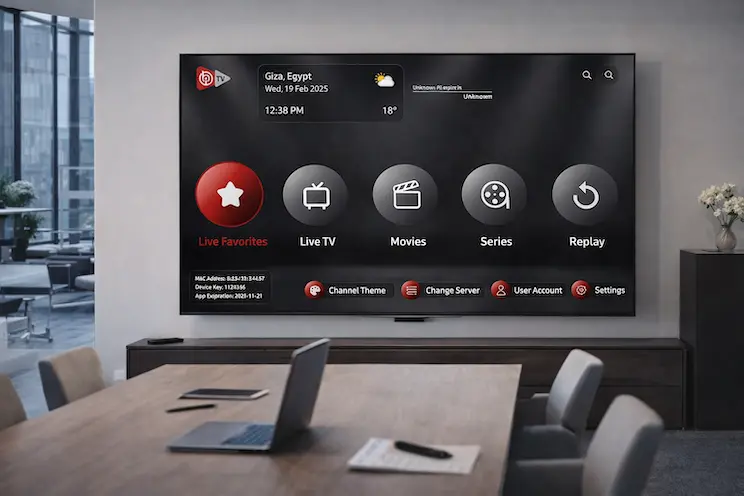
One detail trips up more new IPTV users than anything else: the difference between a player app and the content itself. A player app — IBO Player being a common example — is the software interface you use to browse and watch. Some player apps offer a short free trial and then require an activation to keep the app usable long-term. That activation only unlocks the app itself; it doesn’t include any channels. IBOPlayerPro has a more detailed breakdown of how the app itself works if you want to dig into that separately.
The actual live channels, movies, and series come from a separate IPTV playlist subscription, delivered as an M3U link or Xtream Codes login. A “best” provider makes this distinction clear upfront rather than letting you assume one purchase covers both. If a service’s pricing page doesn’t clearly separate app activation from playlist access, ask directly before paying.
Pricing: What a Fair Structure Looks Like
Reasonable IPTV pricing in Germany typically scales down per month as you commit to longer plans — a monthly plan costs more per month than a 6- or 12-month plan, which rewards commitment with a lower effective rate. As a rough benchmark, a monthly plan in the €9–12 range, dropping toward €3–5 per month equivalent on annual plans, is common among established providers. Prices well below that range across the board are worth treating with some caution, since server costs for a genuinely stable service aren’t free.
It’s also worth checking whether a provider is transparent about what different plan lengths include — some restrict channel count or device support on cheaper tiers, which isn’t necessarily a problem as long as it’s disclosed clearly rather than discovered after payment.
A concrete way to compare providers on price is to calculate the effective monthly cost of their longest plan and their shortest plan side by side. If a provider’s monthly plan costs €10 and their annual plan works out to roughly €4 per month, that’s a meaningful, honest discount for commitment. If the gap between monthly and annual pricing is negligible, that can be a sign the “discount” is more marketing than substance — worth noting, but not necessarily disqualifying if everything else about the service checks out during a trial.
Testing on More Than One Device Before You Commit
If your household plans to watch on more than one screen — a Smart TV in the living room and a phone or tablet elsewhere — it’s worth testing on more than just the device you’re most likely to check first. Some providers perform noticeably better on certain platforms than others, particularly older Smart TV models or budget Android boxes with limited processing power. A service that runs flawlessly on a phone doesn’t automatically guarantee the same experience on a five-year-old TV, so if multi-device use matters to your household, build that into your trial period rather than assuming compatibility carries over evenly across every screen.
Device Compatibility Checklist
Before subscribing anywhere, confirm the service actually supports what you own. Smart TV support (Samsung and LG in particular) matters if you plan to skip a separate streaming box entirely. Fire TV Stick and Android box compatibility covers most households that already have one plugged in. And phone or tablet apps on Android and iOS matter for anyone who wants a backup screen or watches away from the main TV. A well-supported provider covers all of this — plus MAG or dedicated set-top boxes for anyone who prefers that traditional hardware — under a single subscription rather than separate purchases per device.
If you’re planning to watch on more than one screen at once — a living room TV and a bedroom tablet, for example — confirm how many simultaneous connections your plan actually allows, since this varies by provider and sometimes by plan tier.
Why a Free Trial Is Non-Negotiable
Of everything covered here, this is the single most useful piece of advice: never commit to a longer plan without testing first. A short trial — even just a day or two — on your actual device and internet connection tells you more about real-world quality than any amount of marketing copy. Test during peak hours if possible, check a few different channel categories, and pay attention to how quickly a provider responds if something doesn’t work as expected. That last part previews exactly what their support will be like if you run into an issue later as a paying customer.
From Trial to Long-Term Plan: A Sensible Timeline
There’s no need to rush from a free trial straight into a full year of service. A more sensible approach looks something like this: start with a short trial and test during peak viewing hours, ideally including a live sports match if that’s relevant to you. If it holds up, move to a single month rather than committing long-term immediately — this gives you a full billing cycle to catch anything a short trial might miss, like how the provider handles a support request or whether an update causes issues.
Only after a full month of reliable use does it typically make sense to move to a 3, 6, or 12-month plan, at which point the lower effective monthly cost becomes a genuine reward for a decision you’ve actually verified, rather than a bet you’re hoping pays off.
Red Flags Worth Watching For
A few patterns tend to separate trustworthy providers from ones likely to disappoint you. Be cautious of pricing that seems dramatically lower than every competitor with no clear explanation, providers who refuse any form of trial or proof before payment, vague or non-existent responses when you ask direct questions about device support or channel count, and payment methods that feel unusually informal or untraceable for the amount being charged.
None of these alone is necessarily disqualifying, but a provider showing several of these at once is worth approaching carefully.
Support Quality: The Detail Most People Overlook
IPTV isn’t sold with a customer service hotline the way a phone contract is. In practice, support happens through WhatsApp or similar messaging apps, and the quality of that support varies enormously between providers. A responsive, direct answer to a question before you’ve even paid is a strong signal about what happens later if a channel goes down or you need help setting up a new device.
How Much Weight to Give Online Reviews
Reviews and testimonials are everywhere in the IPTV space, and they’re worth reading with a healthy dose of skepticism in both directions. Overwhelmingly positive reviews with vague, generic praise (“great service, highly recommend!”) often carry less signal than a handful of specific, detailed comments that mention concrete things — a particular channel category, how a support request was handled, or stability during a specific event. Specificity is generally a better indicator of authenticity than volume.
At the same time, a small number of negative reviews isn’t automatically disqualifying for any service — every provider accumulates some dissatisfied customers over time, sometimes for reasons unrelated to actual service quality, like a customer’s own internet connection or unrealistic expectations. What’s worth paying closer attention to is a pattern: multiple independent complaints about the exact same issue, like recurring buffering during evenings or unresponsive support, is a much stronger signal than one or two isolated complaints.
Contract Terms and Cancellation: What to Check Before Paying
One underrated advantage of IPTV over traditional German cable and satellite contracts is the general absence of long lock-in periods. Most legitimate providers sell fixed-term plans rather than rolling contracts — you pay for a month, a quarter, or a year, and the plan simply ends unless you choose to renew, rather than auto-renewing into a contract you have to actively cancel.
That said, it’s worth confirming this explicitly before paying rather than assuming it. Ask directly whether a plan renews automatically or requires you to actively resubscribe, and whether there’s any cancellation process at all beyond simply not renewing. A provider that can’t give you a straightforward answer to a simple question like this is worth approaching with extra caution.
Putting It All Together: A Quick Checklist
Before subscribing anywhere, it’s worth running through a short mental checklist rather than relying on gut feeling alone. Has the channel coverage been confirmed for the specific categories you care about, rather than just a total number? Has stability been tested during actual peak hours, ideally with a live sports match if that’s relevant to your household? Is the pricing structure clear about what each plan length includes, and is the distinction between app activation and playlist subscription clearly explained? Does the provider confirm support for every device you actually plan to use? And has support been responsive to at least one direct question before you’ve paid anything?
A provider that checks every box on that list is genuinely difficult to go wrong with, regardless of how it stacks up against a generic “best of” ranking somewhere else online.
IPTV Live DE at a Glance
To put the criteria above into a concrete example: IPTV Live DE’s catalog spans 55,000 live channels and roughly 220,000 combined movies and series across 8K, 4K, and FHD, with plans starting at a monthly option and scaling down in price across 3, 6, and 12-month terms. Support runs through WhatsApp or the Contact Us page, a free trial is available on request, and one subscription covers every screen in the house — TV, box, phone, or tablet — without paying per device.
That’s not a claim that it’s the single objective “best” — it’s an example of what checking every box on the criteria above actually looks like in practice, which is a more useful comparison than any generic ranking.
Frequently Asked Questions
Is the cheapest IPTV provider usually the worst?Not always, but unusually low pricing with no clear explanation is worth treating as a caution sign rather than a bargain, since reliable streaming infrastructure has real costs.
How long should a free trial be to judge a provider properly?Even a day or two is enough to check channel quality and stability during peak hours, though longer trials let you test more channel categories and devices.
Do more channels always mean a better service?No. Coverage of the specific categories you actually watch matters more than the total number, since large counts are sometimes padded with duplicate or low-quality feeds.
What’s the biggest mistake people make when choosing an IPTV provider?Committing to a long plan without testing first. A short trial reveals far more about real-world reliability than any marketing page.
Can I switch providers later if I’m not happy?Yes — since most plans run monthly or for a fixed term rather than a long contract, switching providers at renewal is generally straightforward.
Does the “best” IPTV provider change depending on what I watch?Largely, yes. A household focused on football needs strong sports coverage and stability during matches, while a family focused on movies and kids’ content should prioritize a current, well-organized on-demand catalog instead.
Should I judge a provider by price or by features first?Features and reliability first — an unusually cheap plan that constantly buffers isn’t actually good value, no matter how low the monthly cost looks on paper.
How many providers should I trial before deciding?There’s no fixed number, but testing two or three during peak viewing hours gives a much more reliable comparison than judging any single one in isolation.
Is a bigger company always more reliable than a smaller one?Not necessarily. Server infrastructure and support responsiveness matter more than company size, and some smaller, more focused providers outperform larger ones on both.
Final Thoughts
Rather than chasing a “best of” list that’s really just an advertising ranking in disguise, judge any IPTV provider in Germany against the same handful of practical questions: does it cover what you actually watch, is it stable during peak hours, is the pricing structure clear about what’s included, does it work on your devices, and will support actually respond when something goes wrong. A provider that holds up against all five is worth paying for — and the only way to know for sure is to test it yourself before committing to anything longer than a trial.
None of this needs to be complicated in practice. A short trial, a direct question or two to support before paying, and a quick check against the criteria above will tell you more in twenty minutes than an hour spent reading conflicting “best IPTV” rankings online. The goal isn’t finding a provider everyone agrees is objectively best — it’s finding the one that’s genuinely best for how your household actually watches television.