IPTV in Germany, explained from the ground up — how it fits alongside the country’s broadband and broadcasting landscape
Germany is, in some ways, an unusual market for IPTV Germany services to have grown as quickly as they have. It’s a country with a well-established broadcasting system, a mandatory household broadcasting fee, and a cable and satellite infrastructure that reaches most homes without much difficulty.
And yet IPTV has found a real, lasting audience here — not as a replacement for German broadcasting exactly, but as a way to get everything else alongside it: international channels, a far larger sports lineup, and an on-demand library that would otherwise mean stacking several separate streaming subscriptions.
This is a ground-up look at IPTV Germany specifically — what it actually offers, how it sits next to the broadcasting system most German households are already paying into, what to expect technically, and how to approach choosing a service without getting lost in marketing claims.
IPTV Germany and the Country’s Broadcasting Landscape
Almost every household in Germany pays the Rundfunkbeitrag, the mandatory public broadcasting fee that funds ARD, ZDF and the regional public broadcasters, regardless of whether anyone in the household actually watches traditional television. On top of that baseline, most households add cable, satellite, or a combination of streaming subscriptions to cover private broadcasters, premium sport, and international content.
IPTV doesn’t replace the Rundfunkbeitrag — that’s a separate, mandatory fee tied to having a residence in Germany, not to any particular way of watching television. What IPTV replaces, in practice, is everything layered on top of it: the cable subscription, the satellite dish, the separate sports package, and often several streaming subscriptions at once. For a household already paying the broadcasting fee and looking to simplify what comes after it, that’s the actual value proposition.
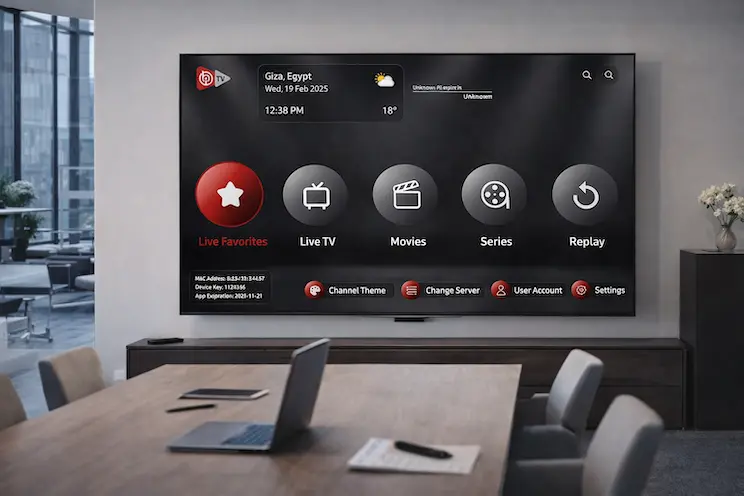
A single IPTV subscription typically replaces cable, satellite, and several separate streaming apps at once
How IPTV Actually Works Over a German Internet Connection
IPTV delivers television over a standard broadband connection rather than through a satellite dish, rooftop antenna, or dedicated cable line. In Germany specifically, this means the quality of your experience depends heavily on which internet provider and connection type you have, since the country’s broadband infrastructure varies more by region than many newer arrivals expect.
Fiber connections from providers like Deutsche Telekom, Vodafone, and O2, increasingly common in larger cities, comfortably handle even 4K IPTV streaming without much thought. In some smaller towns and rural areas, DSL connections with more limited bandwidth are still common, and while they generally handle standard IPTV streaming fine, running 4K content alongside other household internet use can occasionally strain an older connection. If you’re in an area with a slower connection, this is more reason to test thoroughly during a trial period rather than less.
What a German IPTV Subscription Actually Includes
A well-rounded IPTV package built for the German market covers several distinct layers of content. German entertainment and news channels form the anchor — the major private broadcasters alongside the regional variety that cable often handles inconsistently. Sport sits alongside that as one of the biggest draws: Bundesliga coverage, the Champions League, and international leagues like the Premier League and La Liga, which are otherwise scattered across several separate subscriptions in Germany’s fragmented sports broadcasting market.
Beyond German-language content, international channels are a genuine strength of IPTV specifically for this market. Germany’s large communities with roots in Turkey, the Balkans, the Arab world, and across Europe are generally underserved by standard German cable packages, while a well-stocked IPTV lineup typically includes dedicated channels and folders for exactly these audiences. Rounding things out, a proper package includes a film and series library updated regularly enough to function as a genuine alternative to a standalone streaming subscription, not a token afterthought.
With IPTV Live DE specifically, this comes to over 55,000 live channels alongside 175,000+ films and 45,000+ series, spanning 8K, 4K, and Full HD quality depending on the individual channel or title.
ASK ABOUT IPTV GERMANYRegional Differences Within Germany Worth Knowing About
Germany isn’t a single uniform market when it comes to broadband quality, and this matters more for IPTV Germany services than for most other online activities since streaming is more bandwidth-sensitive than browsing or messaging. Major cities — Berlin, Munich, Hamburg, Frankfurt, Cologne — generally have strong fiber coverage where IPTV performs at its best without any special consideration. Mid-sized towns often have solid DSL or a mix of DSL and fiber, generally sufficient for Full HD streaming without issue.
Rural regions are where connection quality varies most, and it’s genuinely worth testing thoroughly in these areas before committing to a longer plan, since local infrastructure — not the IPTV provider — is usually the limiting factor when problems do arise. None of this is a reason to avoid IPTV in these areas; it’s simply a reason to lean more heavily on the free trial period as a real diagnostic tool rather than a formality.
Devices Commonly Used for IPTV Germany Households
Device preferences in Germany broadly mirror the wider European pattern. Smart TVs from Samsung and LG are extremely common and generally support IPTV apps either natively or through straightforward sideloading. The Amazon Fire TV Stick remains one of the most popular standalone options, valued for being inexpensive, simple to set up, and easy to move between TVs or take along when traveling. Android TV boxes offer similar flexibility with slightly more customization for anyone comfortable with that.
Phones and tablets round out most households’ setups, useful both as a primary screen for some viewers and as a convenient backup for everyone else. A single IPTV Live DE subscription covers all of the above under one plan, without needing to purchase separate access per device.
IPTV in Shared and Multi-Generational Households
German households often include multiple generations or multiple unrelated tenants sharing a single address, and viewing habits within the same home can vary enormously — one person following the Bundesliga religiously, another mainly watching series, a third relying heavily on channels in a language other than German. A well-rounded IPTV package handles this reasonably well by default, since the full channel and content library is available to everyone on the subscription rather than being split into narrower packages per user.
What’s worth clarifying upfront, particularly in a shared household, is how many devices can stream simultaneously under a single plan. This detail varies by provider, and confirming it before subscribing avoids a frustrating “already in use” message during a moment when more than one household member wants to watch something different at the same time.
What Free Trials Actually Reveal About IPTV Germany Providers
A free trial period is the closest thing to an objective test available before paying for anything beyond it, and it’s worth using deliberately rather than just confirming the app installs correctly. Testing a live channel during a weekday evening reveals more about real-world stability than testing on a quiet Sunday morning. If sport is a priority, testing specifically during a live match — ideally a popular Bundesliga fixture on a Saturday afternoon — shows exactly how the service performs under the kind of load that actually matters to you.
Beyond stability, a trial is also the right time to browse the film and series library for anything genuinely recent, check whether the specific international channels your household relies on are present and well-organized, and confirm the app runs smoothly on the actual device you’ll be using day to day rather than just a phone you happened to test first.
A deliberate free trial — tested during peak hours — is the most reliable way to judge any IPTV Germany provider
Subscription Plans and Pricing
IPTV Live DE offers four standard IPTV Germany plan lengths, all covering the identical channel and content library — 55,000+ live channels, 175,000+ films, and 45,000+ series in up to 8K quality — with longer plans offering progressively better value per month.
The one-month plan at €9.99 suits anyone who wants to properly test the service under real conditions — a full billing cycle rather than just a short trial — before committing further. The three-month plan at €24.99, working out to roughly €8.33 per month, is a reasonable middle ground for viewers who already have a good sense the service fits their household but aren’t ready for a longer commitment.
The six-month plan at €34.99 brings the effective monthly cost down to around €5.83, a meaningful step up in value for anyone confident in the service. The twelve-month plan at €49.99 — approximately €4.16 per month — offers the strongest value of all four, and is the plan most long-term subscribers eventually settle on once they’ve confirmed the service works well for their household.
How IPTV Germany Compares to Standalone Streaming Subscriptions
It’s worth being specific about this comparison rather than treating it as a given. A single streaming service — a film-and-series platform, for instance — typically costs somewhere between €8 and €15 per month on its own, and covers only its own catalogue. A German household commonly running two or three such subscriptions alongside a separate sports package can easily spend €40 to €60 per month before accounting for cable or satellite at all.
A single well-rounded IPTV subscription, particularly on a longer plan, often costs less than that combined total while covering live sport, general entertainment, international channels, and an on-demand library all at once. This isn’t a universal rule — someone who only ever watches one specific streaming platform and nothing else may genuinely be better served sticking with just that — but for a household juggling several separate services already, consolidating into one IPTV subscription is frequently the more economical choice.
IPTV for Newcomers and Expats Settling in Germany
Germany’s international population — students, professionals relocating for work, and long-term expats — represents a meaningful share of the IPTV audience specifically because traditional German cable contracts often come with long lock-in periods and language barriers that are genuinely inconvenient during a transitional period. IPTV sidesteps both: there’s no long-term contract required, setup and support typically happen in English without difficulty, and the international channel coverage means newcomers aren’t limited to German-language content while they settle in.
For anyone renting short-term or still deciding how long they’ll stay in a given city, this flexibility matters more than it might for someone who has lived in the same home for a decade. A monthly or 3-month plan lets newcomers get set up quickly without the commitment a cable contract would typically require, with the option to move to a longer plan once their situation feels more settled.
Setting Realistic Expectations Before You Start
IPTV Germany, done well, genuinely competes with traditional broadcasting and standalone streaming on both content breadth and cost. But it’s not magic, and a few realistic expectations help avoid disappointment.
Occasional buffering during exceptionally high-demand moments — a major final, a huge series premiere — happens across virtually every streaming service, IPTV included, and isn’t necessarily a sign of a bad provider on its own. Individual channels occasionally go down temporarily while the rest of the service works fine, which is normal rather than alarming. And picture quality on any single channel depends on how that specific feed is sourced and encoded, meaning not every channel in a large lineup will look identical even within the same subscription.
None of this is unique to IPTV — traditional broadcasting has its own version of all three issues — but going in with realistic expectations rather than a marketing-driven ideal makes for a much smoother experience overall.
Why Support Quality Matters More With IPTV Than With Traditional TV
Cable and satellite providers in Germany typically operate call centers and formal customer service departments, however slow they might be in practice. IPTV providers generally work differently — support happens through WhatsApp or similar messaging apps, often directly with the people running the service rather than through a multi-tier call center system. This isn’t necessarily worse, and for many issues it’s actually faster, but it does mean the responsiveness of a specific provider matters more here than it might for a service backed by a large, established company.
Before committing to anything beyond a trial, sending a direct question and noting how quickly and specifically it’s answered is one of the more reliable ways to judge what support will actually look like once you’re a paying customer. A provider who answers clearly and promptly before you’ve spent anything is a reasonable signal for how they’ll handle a genuine issue later.
A Brief Note on the Legal Landscape
IPTV as a technology is simply a method of delivering video over the internet — the same underlying approach used by fully licensed streaming platforms. How any specific service is regulated depends on the content it distributes and the licensing arrangements behind it, which varies by provider and isn’t something a general guide can assess on a case-by-case basis.
As with any online service, it’s worth using common judgment and choosing an established provider with a genuine track record and responsive support, rather than treating price alone as the deciding factor.
REQUEST A FREE TRIALGetting Started
Setting up IPTV in Germany from scratch takes less time than most people expect. Reach out via WhatsApp or the Contact Us page to arrange a free trial. Test it on the actual device and connection you’ll be using day to day, ideally during a weekday evening or a live match if sport matters to you.
Once you’re confident it fits your household, choose the plan length that matches how committed you already feel — a shorter plan if you’re still deciding, a longer one if the trial has already convinced you. Access details typically arrive within minutes of confirming your plan, and setup on most devices takes only a few more minutes after that.
Frequently Asked Questions
Does IPTV replace the Rundfunkbeitrag in Germany?
No. The Rundfunkbeitrag is a mandatory fee tied to having a residence in Germany, separate from how you choose to watch television. IPTV replaces cable, satellite, and separate streaming subscriptions layered on top of that fee, not the fee itself.
Is IPTV a good fit for rural areas with slower internet?
It can be, though connection quality matters more in these areas. Testing thoroughly during a free trial, ideally with a wired connection to your streaming device, is the best way to confirm it works well on your specific connection.
How does IPTV Germany compare in price to cable and satellite?
A well-rounded IPTV subscription is often cheaper than cable or satellite plus a separate sports package and a couple of streaming subscriptions, particularly on longer plan lengths, while typically covering a broader range of content.
Do I need a German internet provider specifically, or does any connection work?
Any stable broadband connection works regardless of provider. What matters is the connection’s stability and speed, not which company supplies it.
Can international channels be added for households that need them?
Yes — a well-stocked IPTV package typically includes international channels covering Turkey, the Balkans, the Arab world, and other regions by default, rather than as a paid add-on.
Final Thoughts
IPTV Germany isn’t a replacement for the country’s broadcasting system so much as a more efficient layer on top of it — one subscription covering the sport, entertainment, international content, and on-demand library that would otherwise mean juggling several separate services. The technical side is straightforward once you understand it, the regional differences in Germany matter mainly for internet quality rather than the service itself, and the free trial remains the single most useful tool for judging whether a specific provider is the right fit before committing further.
Whether you’ve lived in Germany your whole life or arrived last month, the evaluation process is the same: test thoroughly during real conditions, ask direct questions before paying for anything beyond a trial, and choose the plan length that matches how confident you already feel rather than jumping straight to the biggest discount. Get that right, and IPTV in Germany tends to be one of the more straightforward decisions in an otherwise fragmented television market.
If you’re ready to see what IPTV Germany looks like on your own setup, reach out via WhatsApp or the Contact Us page, or explore our guides on IPTV live channels in Germany and choosing the best IPTV in Germany for more detail before you start.
CONTACT US ON WHATSAPP